Follow Us –


Protecting Every Room: Where Smoke and Carbon Monoxide Alarms Belong
Jul 31, 2026
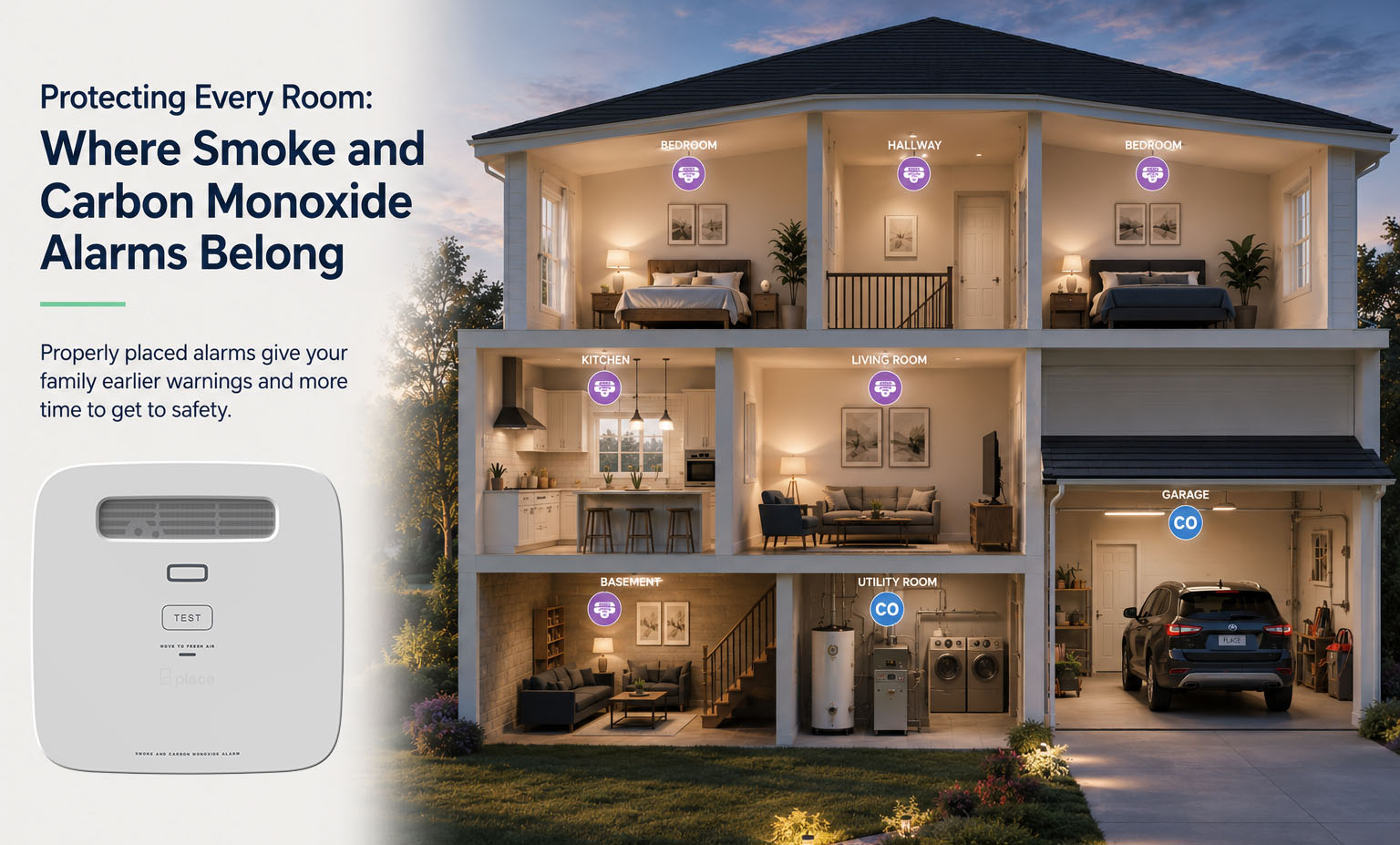
When it comes to protecting your home, having smoke and carbon monoxide alarms is only half the equation. Where you install them matters just as much.
A properly placed alarm can provide valuable extra time to escape during a fire or alert your family to dangerous levels of carbon monoxide before they become life-threatening.
So, where should smoke and carbon monoxide alarms actually go?
Let's break it down room by room.
Smoke Alarms: Where They Belong
According to the U.S. Consumer Product Safety Commission (CPSC), every home should have smoke alarms:
- Inside every bedroom
- Outside each sleeping area (such as hallways)
- On every level of the home, including the basement
These recommendations help ensure you'll be alerted regardless of where a fire starts.
- Bedrooms
People are most vulnerable to fire while sleeping. Having a smoke alarm inside each bedroom provides the earliest possible warning.
Even if you already have one in the hallway, an alarm inside the bedroom offers another layer of protection, especially if the door is closed at night.
- Hallways Outside Sleeping Areas
Hallway alarms help detect smoke moving through your home's primary escape routes.
If someone is sleeping with their bedroom door closed, a hallway alarm can provide additional warning for everyone else in the home.
- Every Level of Your Home
Fires don't just start in kitchens.
Basements, laundry rooms, utility rooms, and living spaces all present potential fire hazards.
Installing smoke alarms on every level helps provide whole-home coverage.
What About the Kitchen?
The kitchen is one of the most common places for home fires, but that doesn't mean a smoke alarm should be mounted directly above the stove.
Cooking smoke and steam can trigger nuisance alarms, leading people to disable or ignore them.
Instead, install smoke alarms according to the manufacturer's instructions and applicable building codes, keeping them an appropriate distance from cooking appliances to reduce false alarms while maintaining protection.
Should You Install a Smoke Alarm in the Garage?
Traditional smoke alarms are generally not recommended inside garages because dust, exhaust fumes, humidity, and temperature extremes can interfere with their operation or cause nuisance alarms.
However, that doesn't mean the garage should be overlooked.
Modern garages often contain:
- Lithium-ion batteries
- Power tools
- Lawn equipment
- Gasoline and other flammable liquids
- Vehicles
Because garages present different environmental conditions and hazards than the rest of the home, it's important to use safety devices that are appropriate for that space and to follow the manufacturer's installation recommendations.
Where Should Carbon Monoxide Alarms Go?
Carbon monoxide (CO) is an odorless, colorless gas produced by fuel-burning appliances such as furnaces, fireplaces, gas water heaters, and attached garages.
The U.S. Environmental Protection Agency (EPA) recommends installing CO alarms:
- On every level of the home's livable space
- Near or inside each sleeping area
- Near the door connecting an attached garage to the home
- At least 15 feet away from fuel-burning appliances whenever possible
If you only have one CO alarm, place it near the sleeping areas where it is most likely to wake occupants if it activates overnight.
Test Your Alarms Regularly
Even the best-placed alarm can't protect your family if it isn't working.
Safety organizations recommend:
- Testing smoke and carbon monoxide alarms once a month
- Replacing batteries when needed (unless your alarm uses a sealed 10-year battery)
- Replacing alarms according to the manufacturer's recommended service life
One Home. Different Rooms. Different Risks.
Every room in your home presents unique hazards.
Bedrooms require early warning while people sleep. Kitchens need protection without constant nuisance alarms. Garages experience heat, dust, vehicle exhaust, and other environmental conditions that differ significantly from the rest of the home.
Choosing the right safety devices and placing them correctly is one of the simplest ways to help protect the people and property you care about most.
Sources
This article references guidance from:
- U.S. Consumer Product Safety Commission (CPSC)
- U.S. Environmental Protection Agency (EPA)
- National Fire Protection Association (NFPA)
These organizations recommend following all manufacturer installation instructions as well as applicable local building and fire codes for your specific home.